

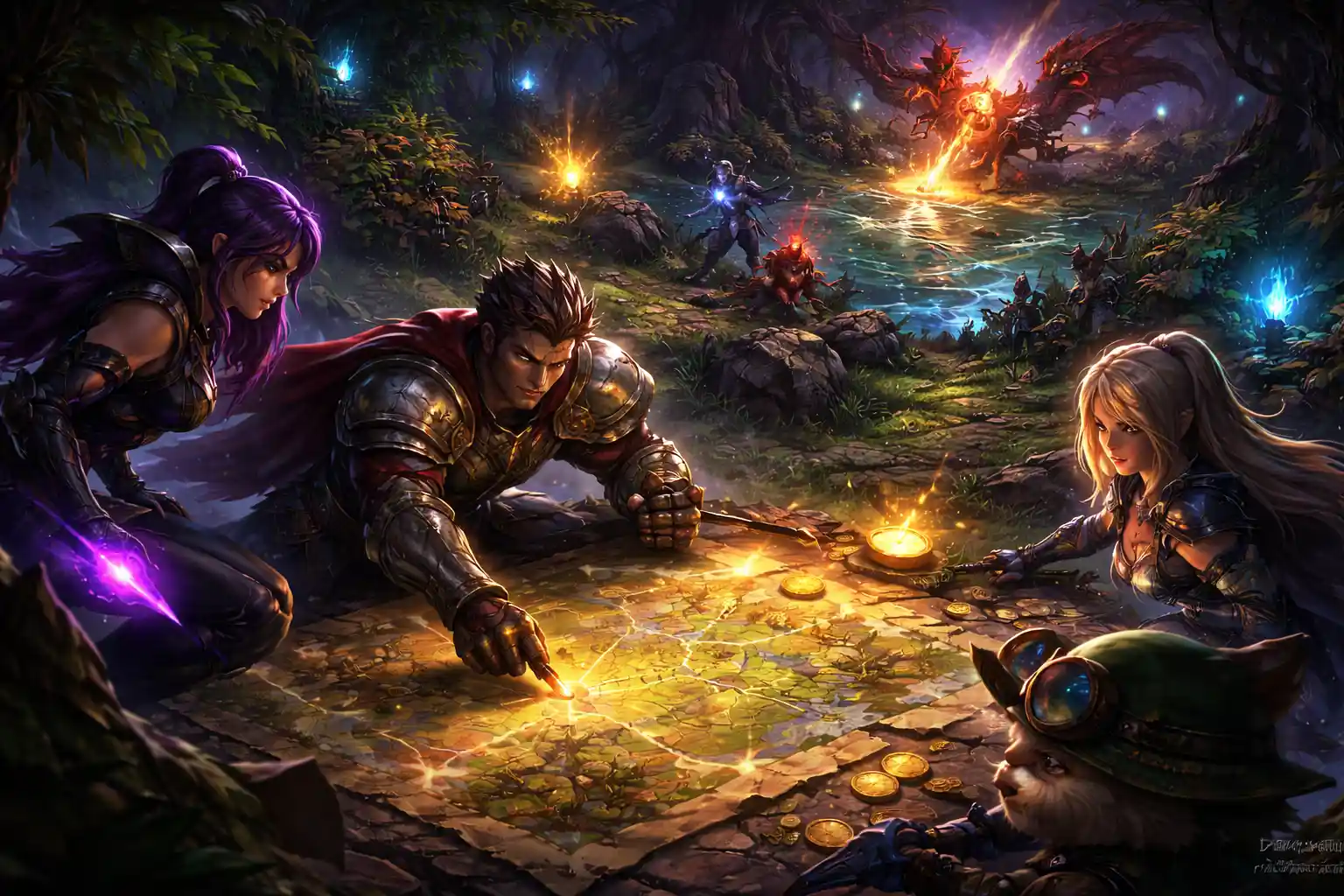
Mid game decisions in League of Legends often feel like the most complex and impactful phase of a ranked match. While the early laning phase revolves around mechanics and farming, and the late game focuses on objective control and team fights, the mid game is where smart choices can tip the balance of the entire match. Many players get stuck here, unsure whether to group, split push, or contest objectives, which leads to missed opportunities and lost games.
Improving your understanding and execution during the mid game can unlock a higher level of play with relatively little change to your champion pool or mechanics. The key is learning how to read the map, prioritize objectives, and adapt your strategy to the current game state instead of blindly following a single plan. This article will break down common mistakes, outline a practical improvement plan, and offer a realistic perspective for players with limited time.
One of the biggest hurdles in the mid game is misjudging risk and reward. Players often overcommit to fights they can’t win or fail to capitalize on advantages because they hesitate or miscommunicate. Here’s a list of common mistakes that sabotage mid game decision-making:
- Overextending after winning a small fight without vision or map awareness
- Ignoring jungle timers and objective spawn timings
- Forgetting to keep lane priority before grouping or forcing plays
- Chasing kills deep into enemy territory instead of resetting and pressuring objectives
- Failing to communicate intentions clearly with teammates, leading to scattered plays
- Neglecting vision control around key objectives like Rift Herald and Dragon
- Getting baited into unfavorable fights due to poor positioning or impatience
- Not adapting your mid game plan based on the strengths and weaknesses of your team composition
To improve mid game decision-making, it’s helpful to follow a focused and actionable plan. This plan should emphasize awareness, communication, and objective prioritization:
- Track key objective timers: Always keep an eye on Dragon, Rift Herald, and Baron spawn times. Use these timers to dictate when to group or split push.
- Maintain lane priority: Before grouping, ensure at least one side lane is pushed to create pressure and reduce risk.
- Improve vision control: Place wards in river entrances and jungle paths near objectives. Clear enemy wards with sweepers systematically.
- Communicate clearly: Use pings and quick messages to coordinate your team’s movements and intentions.
- Evaluate risk vs. reward: Before engaging, ask yourself if the potential gain (objective control, kills, map pressure) outweighs the risk of losing players or objectives.
- Adapt your strategy: If your team excels at split pushing, create opportunities for that. If you have strong teamfight champions, look for safe group fights near objectives.
- Practice patience: Mid game often rewards players who wait for the enemy to make mistakes rather than forcing risky plays.
Even if you’re busy and can’t invest hours every day into ranked climbing, consistent improvement is possible. Focus on quality over quantity by reviewing a few games each week specifically to analyze your mid game decisions. Set small goals like better ward placement or improved communication, then apply those habits in your next games.
For players balancing life and ranked, realistic expectations are essential. Improvement isn’t about making perfect plays every game but steadily reducing costly mistakes. Prioritize learning one aspect of mid game macro at a time rather than overwhelming yourself with everything at once. Over time, these incremental gains add up to a noticeably higher win rate and better overall gameplay experience.
Some players with limited time find tools like coaching platforms or replay analysis services helpful to accelerate this process without grinding endlessly. These services can offer targeted feedback on your decision-making patterns and help you develop personalized mid game strategies that suit your playstyle and schedule.
Mastering mid game decisions requires a combination of map awareness, communication, and adaptability. Avoiding common pitfalls and following a structured improvement plan can help you climb the ranked ladder more efficiently. Whether you have hours or just a few games a week, focusing on these practical mid game habits will make your matches more rewarding and your gameplay more consistent.
Explore more gaming boosting services, guides, and updates on the GoldBoosting homepage.


There are no approved comments yet. Be the first to leave one.