

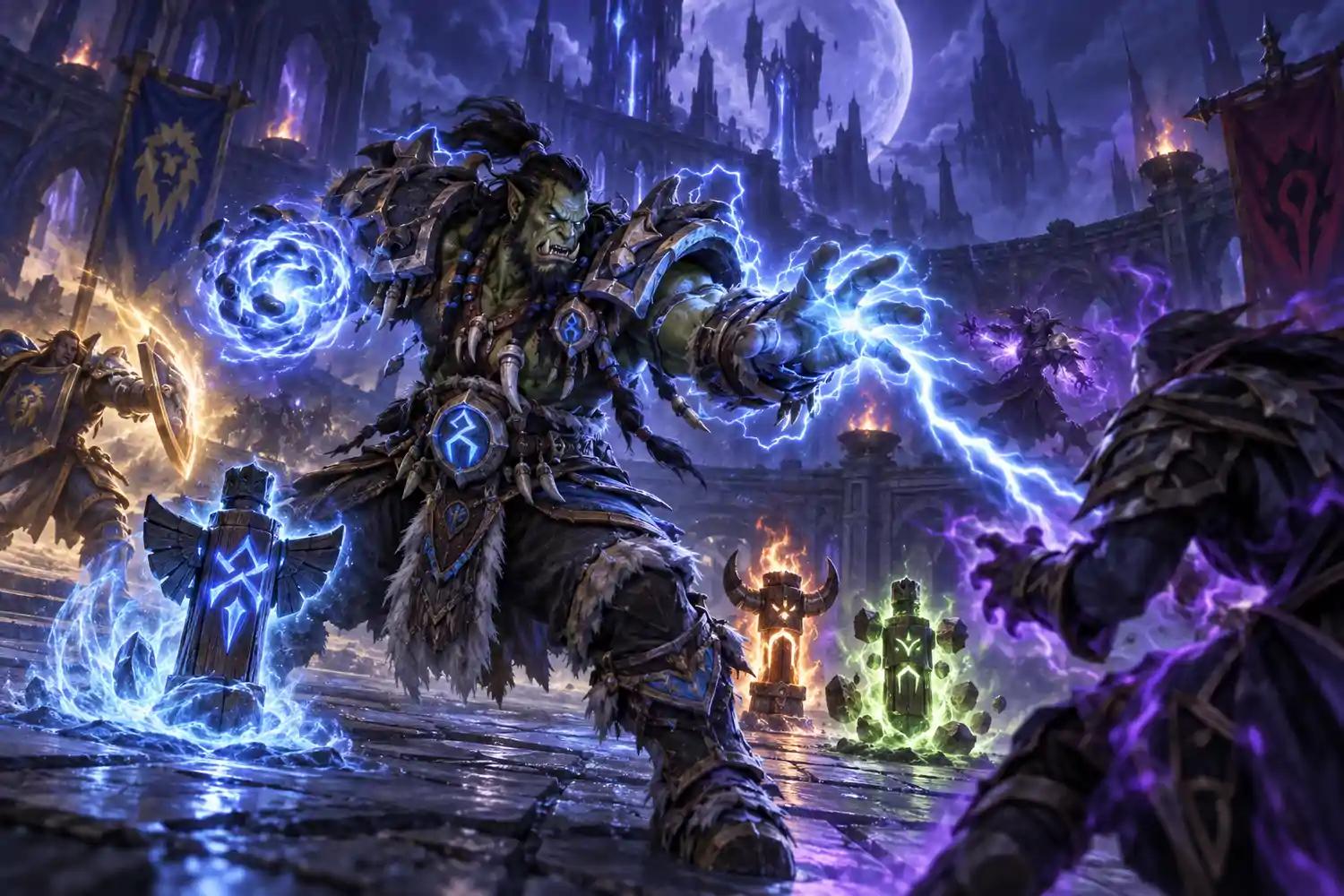
Introduction to Shaman PvP in WoW Midnight
Shamans in World of Warcraft: Midnight offer a dynamic and versatile PvP experience, with three distinct specializations catering to different playstyles: Elemental (ranged DPS), Enhancement (melee DPS), and Restoration (healer). Each spec brings unique strengths and challenges in PvP environments such as arenas, battlegrounds, and skirmishes. This guide covers essential builds, core mechanics, strengths, and practical playstyle tips tailored for PvP to help both new and experienced players get the most out of their Shaman in Midnight.
Understanding your role and the tools available in each specialization is crucial for success. Whether you prefer to deal burst damage from range, engage up close to disrupt enemies, or provide critical healing and utility to your team, this guide will help you optimize your talents, manage your cooldowns, and adopt effective habits to thrive in PvP.
Shaman Specializations Overview for PvP
- Elemental Shaman (Ranged DPS): Focuses on casting powerful spells that deal burst and sustained magic damage. Elemental Shamans excel at kiting, controlling the battlefield with totems, and capitalizing on spellcasting to pressure opponents from a distance.
- Enhancement Shaman (Melee DPS): Thrives on close-quarter combat, using fast attacks and bursts of elemental power. Enhancement brings strong mobility, crowd control, and self-sustain, making it effective at disrupting enemy healers and fragile DPS.
- Restoration Shaman (Healer): Provides vital healing and support through powerful heals and totems. Restoration Shamans combine survivability with strong utility, including cleansing effects and crowd control, which are essential for keeping teammates alive in PvP.
Key PvP Talents and Builds for Shaman
Talent choices can vary depending on your preferred specialization and the type of PvP content you’re engaging in. Below are general guidelines to get you started with viable PvP builds in each spec.
- Elemental PvP Build:
- Prioritize talents that enhance burst damage and crowd control, such as those improving your Lightning Bolt, Lava Burst, and Earth Shock.
- Include talents that increase your survivability and mobility, like Spirit Wolf for quick escapes and Grounding Totem to absorb magical damage.
- Hero Talents and Apex Talents should focus on reducing cast times and increasing damage output while maintaining defensive tools.
- Enhancement PvP Build:
- Choose talents that boost melee burst damage and provide self-healing or mitigation, such as talents enhancing Stormstrike and Lava Lash.
- Mobility talents like Feral Spirit and Ghost Wolf are critical for chasing down or escaping enemies.
- Utility talents that grant crowd control, such as Hex or Capacitor Totem, help control enemy players and turn fights in your favor.
- Restoration PvP Build:
- Focus on talents that strengthen your healing throughput and reduce cast times, such as those improving Healing Surge and Riptide.
- Incorporate talents that grant defensive cooldowns or cleansing abilities to protect yourself and teammates.
- Utility talents that enhance your totems and crowd control abilities are valuable for controlling the battlefield.
Shaman Strengths in PvP
- Versatility: Shamans can adapt to multiple PvP roles, whether dealing damage at range, engaging in melee, or supporting allies as healers.
- Strong Utility: Totems provide valuable buffs and crowd control, such as Tremor Totem for fear breaks and Capacitor Totem for stuns.
- Mobility: Abilities like Ghost Wolf and Spirit Walkers Grace enable Shamans to reposition quickly, escape bad situations, or chase down fleeing enemies.
- Crowd Control: Hex is a powerful polymorph effect that can neutralize key enemy players temporarily.
- Survivability: Multiple defensive cooldowns and healing abilities help Shamans endure burst damage and sustain in prolonged fights.
Common Weaknesses to Manage
- Cast Time Vulnerability: Elemental Shamans rely on casting, which can be interrupted or countered by high mobility or crowd control.
- Positioning Requirements: Enhancement Shamans must close the gap to be effective, which can be risky against ranged opponents or coordinated teams.
- Dependence on Cooldowns: Many Shaman strengths are tied to cooldowns; effective management and timing are essential to avoid being vulnerable when key abilities are down.
Practical PvP Playstyle Tips
- Understand Your Role: Know if you are the main damage dealer, off-healer, or primary healer. Your positioning, target priority, and cooldown usage should reflect this.
- Use Totems Wisely: Place totems strategically to maximize their effect on the fight—whether for healing, crowd control, or damage mitigation.
- Master Crowd Control: Use Hex to neutralize threatening enemy players, but avoid using it on targets who can dispel or interrupt it easily.
- Manage Cooldowns: Track both your own and enemy cooldowns. Save defensive abilities for critical moments and use offensive cooldowns when you can capitalize on enemy vulnerabilities.
- Maintain Mobility: Use Ghost Wolf and Spirit Walkers Grace to stay mobile, avoid enemy focus, and reposition for optimal damage or healing.
- Communicate with Your Team: Coordinate crowd control and burst phases with your teammates to maximize kill potential and survivability.
- Practice Interrupt Timing: Interrupt key enemy spells to reduce their damage or healing output. Effective interrupt usage often turns fights.
- Adapt to the Situation: Change your target priority or defensive strategy based on the flow of the match and your team’s needs.
Role-Specific Advice
- Elemental DPS: Stay at max casting range, use Earthbind Totem to slow enemies closing in, and use Lava Burst on targets affected by Flame Shock for burst damage. Utilize Grounding Totem to absorb enemy crowd control spells.
- Enhancement DPS: Close distance quickly using Ghost Wolf or Feral Spirit, apply consistent melee pressure, and use Hex and Capacitor Totem to control enemy healers or ranged DPS. Use defensive cooldowns like Astral Shift to survive burst attacks.
- Restoration Healer: Position safely but within range to heal teammates, use Tremor Totem to break fears, and apply Riptide and Healing Surge efficiently. Use Spirit Link Totem to mitigate team damage and Hex to interrupt enemy setups.
Common Mistakes to Avoid
- Overextending as Enhancement DPS and getting caught out of position.
- Ignoring totem placement or forgetting to replace them, missing crucial utility or buffs.
- Wasting crowd control abilities on low-priority targets.
- Failing to communicate with teammates about cooldown availability and target focus.
- Neglecting defensive cooldowns, leading to avoidable deaths.
- For Elemental Shamans, standing still too long and being susceptible to interrupts.
Conclusion: Priorities for Shaman PvP Success in Midnight
Succeeding as a Shaman in World of Warcraft: Midnight PvP requires a balanced approach between mastering your specialization’s unique toolkit and adapting to the dynamic flow of PvP combat. Prioritize understanding your role—be it burst damage, sustained pressure, or healing—and leverage your utility through totems and crowd control to shape engagements. Effective cooldown management and positioning will keep you alive and impactful against a variety of opponents. By avoiding common pitfalls such as poor totem use or overextension, and by maintaining strong communication with your team, you’ll maximize your contribution and enjoy a rewarding PvP experience as a Shaman in Midnight.




There are no approved comments yet. Be the first to leave one.