


WoW Forever Launch: November 4, 2026 at 3:00 p.m. PST
WoW Forever Class Rework: 27 Talent Trees Aim to Make Every Spec Viable
One of the biggest changes coming to World of Warcraft: Forever is the class rework. Rather than simply adding new zones, dungeons, raids, and items to the original Classic experience, WoW Forever is also revisiting the way the game's classes and talent trees work. The goal is to preserve the familiar Classic foundation while giving every specialization more tools, more meaningful choices, and a better place in group content.
At the center of this rework are 27 talent trees covering the nine original Classic classes. The system keeps the recognizable Classic talent structure instead of replacing it with an entirely modern talent interface. Many familiar talents remain, while others have been moved, improved, redesigned, or replaced to make room for new options.
For the complete overview of WoW Forever's new zones, classes, progression systems, dungeons, raids, professions, and other Classic Plus changes, visit our complete WoW Forever Classic Plus guide.
What Is the WoW Forever Class Rework?
The WoW Forever class rework is an expansion of the original Classic class system rather than a complete replacement for it.
The developers are keeping the basic structure that Classic players recognize. Talent trees still have the same number of rows, and major one-point talents appear at 11, 21, and 31 points. Forever adds another important milestone at 16 points, creating an additional point in the tree where players can reach a significant talent.
Some talents are almost exactly as players remember them from patch 1.12. Others have been adjusted or improved, while certain class-defining buffs have been moved out of the talent trees and made baseline abilities.
Examples include effects associated with Divine Spirit, Blessing of Kings, and Improved Mark of the Wild. Making these important class buffs baseline creates room in the talent trees for other choices without forcing players to spend talent points simply to provide essential group buffs.
This is one of the central ideas behind the Forever class rework: preserve the recognizable Classic identity while giving the talent system more room to support different builds.
Why Does WoW Forever Have 27 Talent Trees?
There are nine playable classes based on the original Classic class lineup, and each class has three talent trees. That produces the 27 talent trees being revised for WoW Forever.
- Warrior: Arms, Fury, Protection
- Paladin: Holy, Protection, Retribution
- Hunter: Beast Mastery, Marksmanship, Survival
- Rogue: Assassination, Combat, Subtlety
- Priest: Discipline, Holy, Shadow
- Shaman: Elemental, Enhancement, Restoration
- Mage: Arcane, Fire, Frost
- Warlock: Affliction, Demonology, Destruction
- Druid: Balance, Feral, Restoration
The important part is that these are not 27 completely new systems. They are the familiar Classic talent trees being revised as part of a much larger class update.
This approach lets WoW Forever keep one of the defining features of Vanilla and Classic WoW while addressing some of the limitations that became obvious after years of players optimizing the original game.
Every Spec Does Not Have to Be Identical
The phrase "make every spec viable" can easily be misunderstood.
WoW Forever is not trying to make every specialization identical in damage, healing, utility, or defensive capability. The developers have specifically described the goal as making every class and specialization a viable group option while preserving meaningful differences between them.
That means a Protection Warrior does not need to function exactly like a Protection Paladin. A Shadow Priest does not need to become a copy of a Warlock. A Retribution Paladin does not need to lose its hybrid identity simply because the developers want it to be a legitimate damage option.
Instead, each specialization can have its own strengths, weaknesses, utility, and reasons for being brought into a dungeon or raid.
This distinction is particularly important for Classic Plus. The point of the rework is not to erase class identity. It is to create more viable paths while keeping the differences that make Classic classes recognizable.
What Is Actually Changing in the Talent Trees?
The WoW Forever talent trees are being changed in several different ways.
Some talents are staying in recognizable forms because they already work well within the Classic system. Others are being moved to different positions in their trees, improved to make them more attractive, or redesigned to support different builds.
The developers are also moving certain major buffs into the baseline class toolkit. This creates space for new talents that can provide more specialized benefits instead of making players spend valuable points on mandatory group utility.
The new 16-point milestone is another important addition. Classic players are accustomed to major talents appearing at 11, 21, and 31 points, so adding another milestone at 16 points creates additional opportunities for hybrid builds and alternative routes through a tree.
That does not mean every talent will suddenly become equally powerful. Instead, the purpose is to give players more meaningful decisions about where they spend their points.
WoW Forever Talent Trees and Hybrid Builds
One of the most interesting consequences of the rework is the potential for more hybrid builds.
Classic already allows players to split their talent points between trees, but the original system often pushed players toward a relatively small number of established builds. Forever is changing the placement and functionality of many talents, which creates more room for players to experiment with combinations that were previously difficult to justify.
This is especially relevant for classes with strong hybrid identities.
Paladins can combine healing, defensive, and melee-oriented tools. Druids can move between different forms and roles. Shamans can specialize in elemental damage, Enhancement melee combat, or Restoration healing. Priests can explore different combinations of healing, support, and Shadow damage.
The new talent structure is intended to make those choices more meaningful without turning every specialization into the same general-purpose character.
Paladin Is the Best Example of the WoW Forever Class Rework
The Paladin is currently the clearest example of what Blizzard is trying to accomplish with the class rework.
Rather than simply changing a few talent numbers, WoW Forever adds new baseline abilities, changes the Seal and Judgment system, improves tanking tools, and introduces new talent interactions for Holy, Protection, and Retribution.
The result is a Paladin that remains recognizable to Classic players while having considerably more options in combat.
Holy Strike
Holy Strike returns as one of the most notable additions to the Paladin toolkit.
Holy Strike is available at level 6 and functions as an instant weapon attack that deals Holy damage, with a 12-second cooldown in the baseline version. It was originally an early World of Warcraft concept that did not make it into the final Classic game.
Its return is significant because it gives Paladins another active melee tool while fitting naturally into the class's existing Holy damage identity.
Judgment No Longer Consumes Seals
One of the most recognizable parts of Classic Paladin gameplay is also being changed.
In WoW Forever, casting Judgment no longer consumes the active Seal. This removes some of the repetitive Seal maintenance associated with the original system and gives Paladins more freedom to use Judgment without immediately needing to reapply their Seal.
The change also creates space for new interactions between Seals, Judgment, and the talent trees.
Seal of Fury Gives Protection Paladins a New Tanking Tool
Seal of Fury is one of the most important new Paladin mechanics in Forever.
The Seal is designed specifically around Protection Paladin tanking. It deals additional damage with melee attacks, provides a small absorption shield, and allows Judgment to taunt the target while the Seal is active.
Judgment of Fury also has a 10-yard range, giving Protection Paladins a ranged taunt option that extends farther than the standard 5-yard range of other traditional tank taunts.
This directly addresses one of the longstanding limitations of Classic Paladin tanking while preserving the class's distinctive Seal and Judgment mechanics.
Consecration Becomes More Important
Consecration is also receiving a major adjustment.
In WoW Forever, Consecration is baseline at level 20 and acts as both a damage and threat tool. The first four targets inside the area receive significantly higher damage and threat, while additional targets receive lower values.
This creates a more controlled form of area threat rather than simply allowing a Paladin to produce maximum threat against an unlimited number of enemies.
It also fits the broader Forever combat philosophy, where threat management, positioning, crowd control, and deliberate pulls remain important parts of dungeon gameplay.
Holy Paladin Talent Changes
The Holy talent tree receives several new interactions designed to give healers more options than simply repeating the same healing spell.
Improved Holy Strike reduces the cooldown of Holy Strike, giving Holy Paladins an additional offensive tool. Voice of Truth provides temporary immunity to Silence and Interrupt effects, while Reverence allows Paladins to regenerate Mana from Spirit while casting.
Infusion of Light creates another interaction between Holy Shock, Flash of Light, and Holy Light by allowing critical heals to reduce the cast time of Holy Light.
Holy Shock itself becomes easier to reach in the talent tree and receives a reduced cooldown. Consecrated Ground adds another interaction by causing enemies standing in Consecration to take increased Holy damage.
Another notable ability is Light's Vigil, a high-cost cooldown that can reset Holy Shock and provide either additional damage against enemies or additional healing through an ally.
These changes are designed to make Holy Paladin gameplay more varied while keeping the specialization focused on healing and Holy magic.
Protection Paladin Talent Changes
Protection receives a different set of improvements because its main problems revolve around threat, Mana, survivability, and reliable tank control.
Improved Seal of Fury and Shield Specialization provide additional Mana interactions, helping address one of the resource problems that can affect Paladin tanks.
Swift Judgment can reset Judgment after a missed use, which is particularly useful because Judgment of Fury is connected to the Protection Paladin's taunt system.
Templar's Bulwark provides a powerful absorption shield while interacting with Forbearance. Reckoning has also been redesigned to work more effectively for tanks, including interactions with blocks.
Finally, Iron Creed allows Holy Strikes to provide an additional defensive benefit, creating another connection between the new baseline ability and the Protection talent tree.
Retribution Paladin Gets More Than a Damage Increase
Retribution is also being redesigned around more active melee gameplay and alternative Holy damage paths.
Vindication becomes a more meaningful offensive and defensive debuff by reducing enemy Attack Power while increasing the Paladin's own Attack Power.
Sacred Arbiter creates additional Judgment interactions, while Champion of the Light gives Intellect more value for Retribution builds by increasing spell damage based on the stat.
Instrument of Law can make Hammer of Wrath instant, providing a stronger ranged finishing tool.
There is also a new approach to Seal Twisting through Twist of Light. Swapping Seals can cause the previous Seal's effect to echo into the next melee swing, allowing players to combine benefits from multiple Seals.
Players who do not want to use Seal Twisting can instead build toward Holy Shock through the Holy tree, creating a more spell-oriented Retribution style.
Other Class Changes Beyond the Paladin
The Paladin receives the most detailed class showcase so far, but the same design philosophy extends across the rest of the game.
WoW Forever's class rework is intended to preserve recognizable Classic abilities while improving underused talents, adding new interactions, and making more specializations viable choices for group content.
This means players should expect changes to how familiar classes are built and geared rather than simply receiving the same Classic builds with higher numbers.
The changes also interact with the new race and class combinations arriving in Forever. Human Hunters, Dwarf Shamans, Gnome Priests, Orc Mages, Troll Warlocks, and Undead Paladins all introduce new combinations that did not exist in original Classic.
These combinations become even more interesting when combined with the updated racial abilities and revised talent trees.
WoW Forever Racial Rework Works Alongside the Talent Rework
The class changes are not happening in isolation.
Racial abilities are also being redesigned. Each race receives two active and two passive racial abilities, with the goal of giving races distinct strengths without pushing every race toward the same overall power profile.
For example, the Undead receive changes to several of their traditional abilities. Will of the Forsaken still removes Charm, Fear, and Sleep effects, but no longer grants the old immunity afterward. Cannibalize now restores Mana as well as Health, making it more useful for Mana-based classes such as Paladins and Priests.
Undead also gain Touch of the Grave, a damage-oriented racial that gives attacks a chance to drain life from enemies.
These changes are particularly relevant to new combinations such as the Undead Paladin because both the race and class are being updated at the same time.
How the Class Rework Changes Classic WoW Builds
Classic WoW is famous for having a relatively solved talent and gearing environment. After years of theorycrafting, players know which talents are usually considered mandatory and which options are often ignored.
WoW Forever is deliberately changing that environment.
New talents, revised talent locations, new baseline abilities, new itemization, and new class combinations all interact with one another. A build that was standard in Vanilla may still be useful as a starting point, but it cannot automatically be assumed to be optimal in Forever.
This is especially important because itemization is also being revised. Hit and critical strike categories are being consolidated, Expertise is being added, bonus healing can contribute to damage, trinkets are becoming more specialized, and boss and dungeon loot tables are being updated.
As a result, talent choices and gearing decisions will increasingly need to be considered together.
Classic Combat Still Matters in WoW Forever
Despite the size of the class rework, WoW Forever is not trying to turn Classic into modern World of Warcraft.
The developers have repeatedly emphasized the importance of the Classic combat identity. Slower combat, threat management, crowd control, resistances, immunities, preparation, positioning, communication, and group composition remain important.
This is why the talent rework focuses on giving classes more tools without removing their limitations.
For example, Paladins gain a proper tanking taunt through Seal of Fury, but they still do not receive every utility tool available to other tanks. They continue to have class-specific weaknesses, including the lack of a traditional interrupt and limited ways to slow targets.
The same philosophy applies to other classes. The goal is not to eliminate weaknesses. It is to make those weaknesses more interesting to manage while giving each specialization enough tools to have a meaningful role.
How the 27 Talent Trees Affect PvE
The talent rework has major implications for dungeons and raids because the value of a specialization is no longer determined entirely by the original Classic meta.
New talent interactions can change how tanks generate threat, how healers manage Mana, how DPS classes contribute utility, and how hybrid classes participate in group content.
The changes also matter because WoW Forever is adding new dungeons and raids while keeping the level cap at 60. Players will encounter content designed around the updated class toolkit rather than simply repeating the exact Vanilla environment with unchanged abilities.
That means talent choices can become part of the strategy for approaching different encounters. A build that provides strong single-target damage may not necessarily offer the same utility as one designed around area damage, survivability, crowd control, or support.
How the 27 Talent Trees Affect PvP
The same changes will influence PvP.
Classic PvP often revolves around specific talent builds, racial combinations, gear choices, and well-known class matchups. WoW Forever changes several of those variables at the same time.
New talents can introduce different defensive or offensive interactions, while racial changes and new class combinations create additional combinations for players to experiment with.
Forever is also receiving broader PvP updates and new rewards, meaning the final PvP environment will not simply be a copy of original Classic PvP.
Players should therefore expect established Classic PvP builds to serve as reference points rather than guaranteed Forever templates.
How to Build Your Character in WoW Forever
The expanded talent system may initially make character planning look more complicated, but the basic process remains familiar to Classic players.
- Choose your role: Decide whether your character is primarily focused on tanking, healing, melee damage, ranged damage, or a hybrid role.
- Learn the baseline class changes: New abilities and baseline buffs can significantly change how familiar rotations and builds work.
- Study the entire tree: Do not judge a talent only by its immediate effect. Its position can determine which later talents and combinations become available.
- Look for interactions: Some of the strongest changes in Forever come from talents that modify existing abilities rather than simply adding raw stats.
- Consider your content: A dungeon, raid, leveling, or PvP build may have different priorities.
- Watch the evolving data: Talent calculators and theorycrafting resources will become increasingly important as players test the new systems.
It is also worth remembering that the available talent information is still evolving. Wowhead's current Forever talent calculator is based on information shown in panels and testing, and the site notes that some exact values and newly added talent icons may change as the beta client becomes available.
Why Old Classic Talent Guides May Not Be Enough
Original Classic guides remain useful for understanding the fundamentals of each class, but WoW Forever introduces enough changes that players should not blindly copy a Vanilla talent build.
A talent that was considered mandatory in patch 1.12 may have been moved or changed. A previously weak talent may now interact with a new ability. A class buff may have become baseline, freeing those talent points for another choice.
Paladin is the clearest example. A Classic Paladin guide cannot account for Holy Strike, Seal of Fury, the updated Judgment system, the new Consecration behavior, or the new Holy, Protection, and Retribution talent interactions.
The same principle applies across the 27 talent trees.
WoW Forever Class Rework and New Itemization
Talent changes would have a limited impact if the rest of the game remained unchanged. WoW Forever is instead changing itemization at the same time.
Melee, ranged, and spell Hit and Critical Strike are no longer separated in the same way as Classic. Expertise has been added, bonus healing can contribute to damage, and trinkets are being designed with more specialized effects.
Boss loot tables have also been updated, dungeon drops are being improved, world drop epics are being expanded, and quest rewards are receiving updates.
This creates a much larger theorycrafting environment. Players will need to consider how talents, stats, item effects, and class mechanics work together rather than treating the talent tree as an isolated progression system.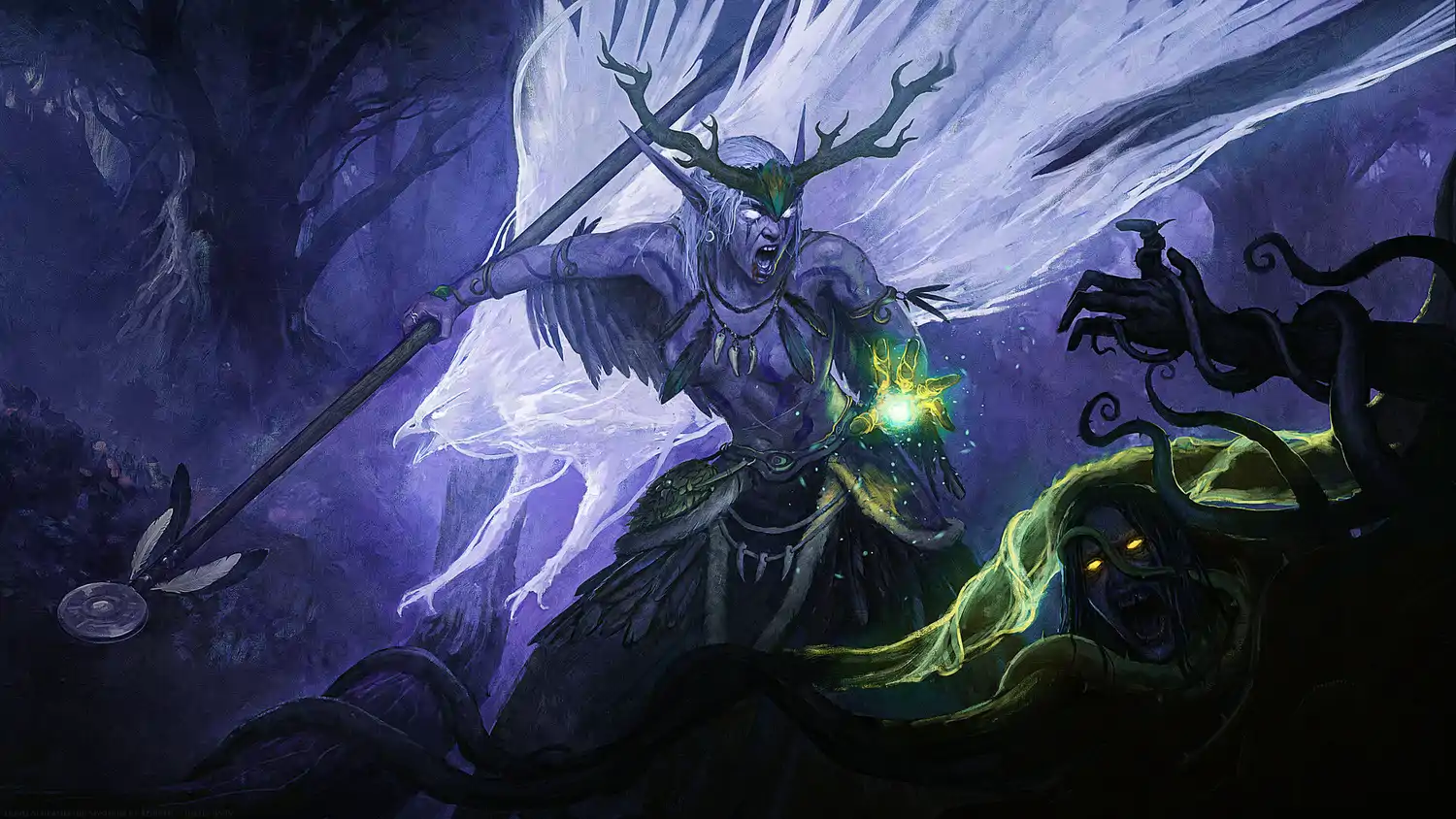
The 27 Talent Trees and WoW Forever's Long-Term Progression
One reason the class rework matters so much is that WoW Forever is designed as a permanent level 60 version of Azeroth rather than a temporary seasonal ruleset.
The game adds horizontal progression instead of repeatedly increasing the level cap. Your character can continue developing through new gear, talents, professions, Legacy progression, new content, and future updates without immediately replacing the original Classic world.
The Legacy System adds another progression layer on top of the level 60 experience, while new itemization and class changes give players additional reasons to revisit characters and experiment with different builds.
This makes the 27 talent trees more important than a simple launch feature. As new content arrives, players will continue discovering new interactions between classes, talents, items, professions, and encounters.
What the WoW Forever Class Rework Means for Classic Plus
The defining idea behind WoW Forever is to expand Classic without abandoning what makes Classic recognizable.
The class rework follows exactly the same philosophy.
The developers are not replacing the original talent system with an entirely different progression model. Instead, they are taking the familiar 27-tree structure and modifying it from within.
Classic abilities remain recognizable. Familiar talents remain in the game. Classic combat principles remain important. At the same time, new abilities, talent interactions, racial changes, class combinations, itemization, dungeons, raids, and other systems create a version of Azeroth that plays differently from original Vanilla.
This is what makes the class rework one of the most important parts of WoW Forever's Classic Plus design. The new content is not simply being placed on top of unchanged Classic classes. The classes themselves are being prepared to interact with that new content.
WoW Forever Class Rework FAQ
How many talent trees are in WoW Forever?
WoW Forever has 27 talent trees across the nine original Classic classes, with three trees for each class.
Are the WoW Forever talent trees completely new?
No. The talent trees retain the familiar Classic structure. Some talents remain unchanged, while others are moved, improved, redesigned, or replaced with new options.
Does WoW Forever make every specialization equal?
No. The stated goal is to make every class and specialization a viable group option while preserving meaningful differences between them. The intent is not for every spec to perform identically or have the same utility.
What is new about WoW Forever talent milestones?
Classic talent trees traditionally feature major one-point milestones at 11, 21, and 31 points. WoW Forever adds another milestone at 16 points while retaining the familiar structure.
What talents are being made baseline?
Some major class buffs that previously required talent points are becoming baseline abilities. Examples mentioned by Blizzard include Divine Spirit, Blessing of Kings, and Improved Mark of the Wild.
What is the biggest example of the WoW Forever class rework?
Paladin provides one of the clearest examples. The class receives Holy Strike, changes to Judgment and Seals, Seal of Fury, an improved Consecration, and numerous new Holy, Protection, and Retribution talent interactions.
Does WoW Forever add new class and race combinations?
Yes. The new combinations include Gnome Priest, Human Hunter, Dwarf Shaman, Orc Mage, Troll Warlock, and Undead Paladin.
Will Vanilla WoW talent builds still work in WoW Forever?
They can provide a useful starting point, but they should not automatically be treated as optimal. The talent trees, class abilities, racial abilities, itemization, and content have all changed.
Will the WoW Forever talent system change the PvP meta?
The new talents are expected to affect PvP because they change class abilities and build options, while Forever is also receiving broader PvP updates. The exact metagame will develop as players test the systems.
Prepare for the WoW Forever Class Rework
The 27 talent trees are only one part of the broader WoW Forever progression system. New class combinations, racial abilities, itemization, professions, dungeons, raids, PvP systems, and the Legacy System all interact with character development.
If you want to get your character ready for the new Classic Plus experience without spending all of your time on the initial leveling process, you can explore our WoW Forever leveling boost.
You can also browse our WoW Forever boosting services for leveling, dungeons, gearing, raids, and other progression options.
Final Thoughts on the WoW Forever Class Rework
The WoW Forever class rework is much more than a collection of new talents.
The 27 talent trees preserve the familiar Classic structure while opening more room for alternative builds, hybrid choices, and specialization-specific mechanics. Important buffs are being moved into the baseline class toolkit, a new 16-point milestone is being added, and individual talents are being redesigned to give players more meaningful decisions.
Paladin shows how far the rework can go. Holy Strike returns, Judgment no longer consumes Seals, Seal of Fury gives Protection Paladins a dedicated tanking tool, Consecration becomes more useful, and all three Paladin specializations receive new talent interactions.
At the same time, the rework does not attempt to erase the weaknesses that make Classic classes distinctive. The developers' stated goal is viability without uniformity. Every class and spec should have a meaningful place in group content while still having its own strengths, weaknesses, and reasons to be chosen.
Combined with new itemization, racial changes, class combinations, professions, dungeons, raids, PvP, and long-term Legacy progression, the 27 talent trees form one of the foundations of WoW Forever's Classic Plus design.
For players who have spent years mastering the original Classic talent system, Forever offers something fundamentally different: a familiar talent structure that is no longer completely solved.

There are no approved comments yet. Be the first to leave one.