


WoW Forever: The Complete Classic Plus Guide
World of Warcraft Forever, commonly known as WoW Classic Plus, is built around a simple but ambitious idea: what if Classic World of Warcraft never had to leave Azeroth? Instead of following the traditional path from Vanilla WoW into The Burning Crusade, Wrath of the Lich King, and later expansions, WoW Forever keeps the game centered around the original level 60 experience while continuously adding new content, systems, stories, and ways to progress.
Often described as an evergreen Classic WoW experience, WoW Forever expands Azeroth horizontally rather than increasing the level cap. Your character can continue to become stronger and more accomplished through new gear, professions, reputations, achievements, exploration, talents, collectibles, and long-term progression systems without the next expansion making everything you earned obsolete.
That philosophy is what separates WoW Forever from a traditional expansion cycle. The goal is not to replace Classic Azeroth, but to keep building on it. New zones can be added alongside existing ones, previously inaccessible areas can be opened, unused Warcraft lore can be explored, and new dungeons and raids can provide fresh endgame challenges while the original world remains relevant.
This complete WoW Forever Classic Plus guide covers everything currently known about the project, including the permanent level 60 cap, new zones, dungeons, raids, the Skyborn race, the Forsaken Paladin, class and talent changes, professions, the Legacy System, housing, camping, PvP, new itemization, and the broader story direction behind the game.
What Is WoW Forever?
At its core, WoW Forever is a permanent level 60 version of Classic WoW. The game keeps the foundation of Vanilla Azeroth while adding new content and systems designed to give players reasons to continue exploring and progressing indefinitely.
Instead of the traditional progression path of level 60 leading into an expansion, followed by another level cap increase and another round of gear replacement, Forever is designed around horizontal progression. Your level remains important, but so do your gear, professions, reputations, achievements, exploration, collectibles, and character development.
This creates what can be described as an Evergreen Classic Azeroth. The world is not treated as a temporary stepping stone toward the next expansion. New content is intended to exist alongside the original game and expand what players can do within it.
The basic philosophy can be summarized like this:
- Permanent level 60 cap: Progression continues without raising the maximum level.
- Evergreen Azeroth: The original world remains relevant as new content is added.
- Horizontal progression: Gear, professions, reputations, achievements, exploration, and other systems provide long-term progression.
- New stories: Previously unexplored Warcraft III and Vanilla-era storylines are expanded without completely rewriting established Warcraft history.
- New content: New zones, dungeons, raids, quests, factions, items, talents, professions, and systems continue to expand the game.
- Classic identity: Combat remains slower and more deliberate, with threat, crowd control, positioning, preparation, resistances, and group composition still playing important roles.
Why Does WoW Forever Keep the Level 60 Cap?
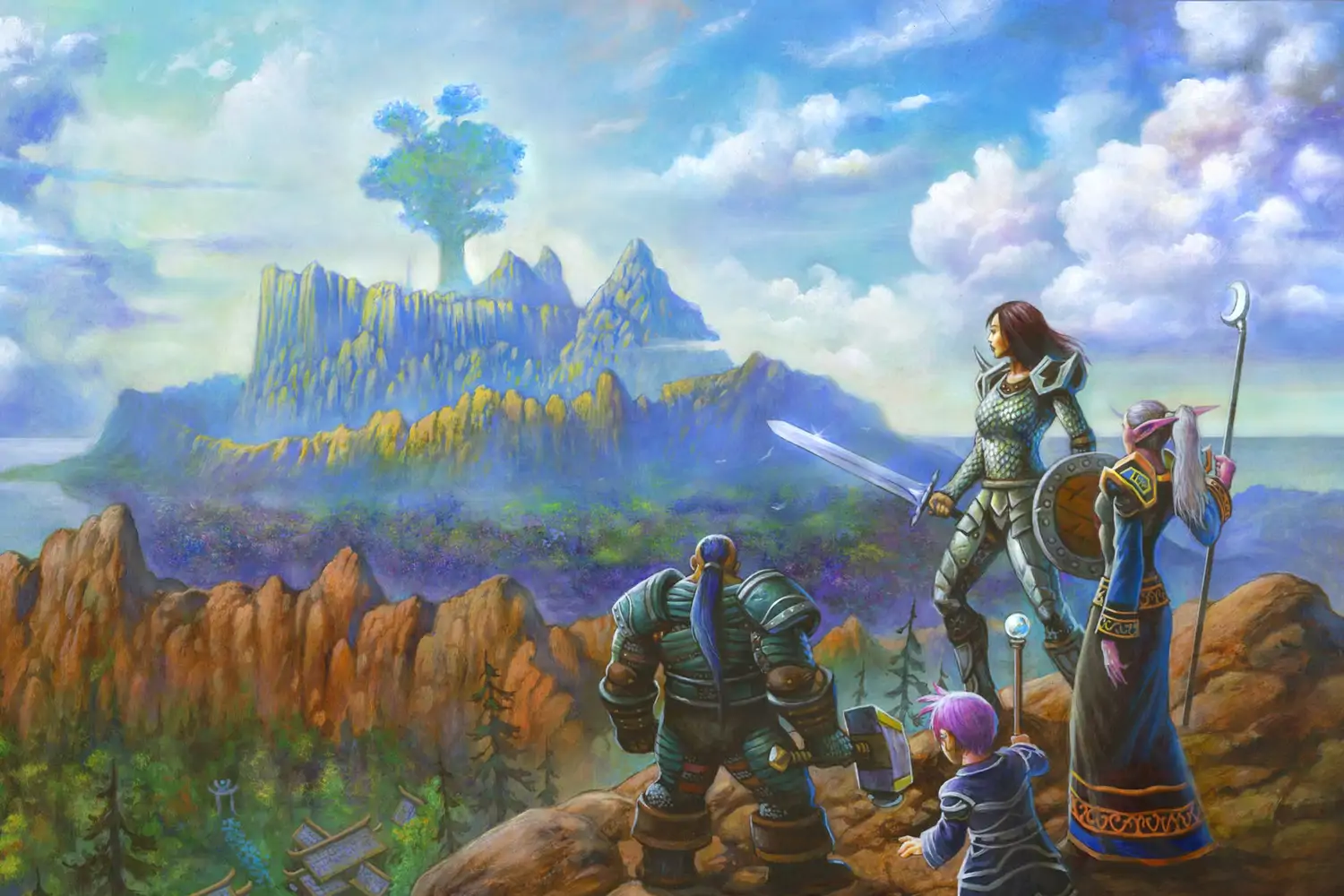
The permanent level 60 cap is arguably the most important part of the entire WoW Forever concept. Traditional World of Warcraft progression eventually makes older content less relevant. A new expansion raises the level cap, introduces stronger equipment, and sends players into a new continent or world. Previous gear and progression can quickly become obsolete.
WoW Forever takes the opposite approach. Instead of asking players to leave Azeroth behind, the game is designed to keep expanding Azeroth itself.
Your character can still progress through better equipment, new item effects, professions, reputations, achievements, exploration, collectibles, talents, and Legacy progression. The difference is that these systems are designed to build upon your existing character rather than replace it every time a new expansion arrives.
This is the foundation of the game's evergreen design. The intended progression is not:
Level 60 → The Burning Crusade → Level 70 → Wrath of the Lich King → Level 80 → new expansion
Instead, the idea is closer to:
Level 60 → new zones → new dungeons → new raids → new professions → new items → new stories → new systems → repeat
The result is a version of Classic WoW where your existing character, gear, accomplishments, and knowledge of Azeroth can remain useful as the game continues to grow.
WoW Forever Expands Classic Azeroth
WoW Forever is not simply adding a handful of isolated new zones. One of the central ideas behind the project is revisiting the original world and asking what stories, characters, factions, and locations could have existed within it.
The developers have discussed revisiting roughly 40 existing zones and expanding them with new quests, NPCs, factions, rewards, mysteries, leveling paths, and previously inaccessible locations. Some areas referenced in Warcraft III or Vanilla WoW can also be explored in greater detail.
This means that the Classic world itself becomes part of the new content. Rather than abandoning familiar locations for an entirely new continent, players can discover that there is more to the original Azeroth than they previously realized.
The design philosophy is particularly important here. New content should feel as though it could naturally exist within Warcraft's established world instead of looking like a completely separate expansion attached to Classic.
New Zones in WoW Forever
Several new areas have already been discussed as part of the WoW Forever experience. These zones are intended to expand the world while connecting new stories to existing regions and Warcraft lore.
Riverglades
Riverglades is one of the major new leveling areas. It is located along the eastern side of the Eastern Kingdoms, around the Redridge, Burning Steppes, Badlands, and Swamp of Sorrows regions.
The zone is designed for mid-level characters and includes more than 150 new quests, Horde and Alliance content, new factions, new characters, new rewards, and additional leveling opportunities. It also includes a neutral goblin port and new stories connected to the surrounding regions.
Riverglades is a good example of how WoW Forever approaches new content. Rather than simply placing an unrelated zone on the map, it expands an area of Azeroth that already has connections to the existing world.
Shendrolos
Shendrolos is another new area located south of Desolace. It is connected to the Riverglades storyline and fits into the wider effort to explore parts of Azeroth that were previously unused or only lightly developed.
Zephris Isle
Zephris Isle is closely connected to the Skyborn and their history. The area explores the relationship between the Skyborn, elemental wind spirits, Skywall, and the origins of the new race.
Other New and Expanded Locations
WoW Forever also introduces or expands several other locations, including Mantle Vault, Bandarion Keep, Barrow Deeps, and Thragar Stand. Previously inaccessible areas of Dalaran, expanded areas around Undercity and Lordaeron, and locations connected to Warcraft III history are also part of the broader world expansion.
The important part is not simply memorizing every new location. WoW Forever is taking the existing map and continually finding ways to make it larger, deeper, and more useful.
New Dungeons in WoW Forever
At launch, WoW Forever is planned to include 9 new dungeons alongside two new raids. These dungeons provide additional group content while giving players new reasons to explore areas of Azeroth that were previously unused or underdeveloped.
Several of the dungeons specifically discussed include:
- Thragar Stand
- Barrow Deeps
- Karazhan Crypts
- Scarlet Enclave
Other dungeon concepts include underwater-themed content and additional expanded or legacy locations.
These dungeons are not necessarily designed as simple linear corridors. Barrow Deeps, for example, is described as having a more open structure where players can choose their path and explore.
Thragar Stand is also described as a three-boss dungeon. Together, these instances provide a new layer of group content while maintaining the exploration-focused design that runs through much of WoW Forever.
New Raids in WoW Forever
WoW Forever's initial content package includes 2 new raids: Hyel Summit and World Core.
Hyel Summit
Hyel Summit is strongly connected to the Battle of Mount Hyjal and the events of Warcraft III. The raid gives WoW Forever an opportunity to expand on one of the most important moments in Warcraft history while exploring what could have happened around those events.
World Core
World Core is described as an eight-boss raid and represents another major piece of new endgame content for level 60 characters.
The initial raids are not intended to be the end of WoW Forever's content. Additional raids, dungeons, PvP updates, world content, quests, rewards, and systems are planned beyond the initial package.
The Skyborn: WoW Forever's New Race
One of the biggest additions to Classic Plus is the introduction of the Skyborn, a completely new playable race.
The Skyborn are connected to a floating, elemental-themed background involving wind spirits, Skywall, and Zephris Isle. Their story gives WoW Forever another way to explore parts of Warcraft lore that were previously left undeveloped.
The Skyborn are not simply a cosmetic addition. They have their own customization options, animations, voices, dances, and Druid forms, giving the race a distinct identity within the world.
Skyborn also have access to a selection of classes, including Warrior, Hunter, Rogue, Druid, Mage, and Shaman, although there are restrictions within those combinations. In particular, only the appropriate Windshaper Skyborn can become Shamans.
The addition of the Skyborn is part of a wider goal of expanding the number of viable race and class combinations without completely abandoning the identity of Classic WoW.
The Forsaken Paladin and Undead Paladins
Another major change coming to WoW Forever is the ability for the Forsaken to become Paladins.
The Undead Paladin is one of the clearest examples of how Forever uses unused or underdeveloped Warcraft ideas as the foundation for new content. Rather than simply changing a race-class restriction without explanation, the game provides lore for how an undead character can interact with the Holy Light.
This also creates an important gameplay change because Paladin is receiving a substantial rework at the same time. The Forsaken Paladin therefore becomes part of a much larger class design overhaul rather than being an isolated new combination.
The WoW Forever Paladin Rework
The Paladin class is receiving some of the most significant changes in WoW Forever. The goal is not simply to add another race that can play Paladin, but to make the class more flexible and viable across its different roles.
One of the most notable additions is Holy Strike, an ability that was originally planned for early World of Warcraft but was cut before release. It returns in WoW Forever as another melee Holy damage tool.
Judgment is also being changed so that it no longer consumes the active Seal. A new Seal of Fury is designed around Paladin tanking, while Judgment of Fury provides a ranged taunt.
Consecration is also receiving improvements, while Holy Paladin receives new interactions involving Holy Strike, Holy Shock, and other talents. Protection Paladins receive additional tools for threat generation, mana sustain, ranged threat, tanking, and cooldown management.
The broader goal is to make Paladin specializations viable without forcing everyone into one mandatory build.
27 Talent Trees and the WoW Forever Class Rework
The Paladin changes are only one part of a much larger class overhaul. All 27 talent trees are being touched in WoW Forever.
Some familiar talents remain unchanged, while others are moved, improved, redesigned, or supplemented with new talents. The goal is to make every specialization worth considering while still giving different classes and builds distinct strengths and weaknesses.
This is important because WoW Forever is deliberately challenging some of the old Classic meta. New itemization, talents, abilities, class combinations, systems, and PvP changes are all intended to create new possibilities for theorycrafting.
The objective is not to make every class identical. Instead, the goal is to give each class and specialization meaningful reasons to exist within group content.
Talent changes can also make hybrid and PvP builds more viable by moving important abilities earlier in talent trees and giving players more flexibility in how they build their characters.
Classic Combat Is Still at the Center
Despite the number of new systems being introduced, WoW Forever is not designed to turn Classic into modern Retail WoW.
The core combat identity remains important. Players can still expect slower combat, threat management, crowd control, resistances, immunities, preparation, positioning, communication, and meaningful group composition to matter.
This is an important distinction for players who enjoy Vanilla WoW because the goal is to add depth without removing the reasons Classic combat feels different from modern World of Warcraft.
WoW Forever therefore tries to solve one of Classic's biggest limitations without abandoning its strengths. The game can add new abilities and systems while still requiring players to think about threat, positioning, preparation, group roles, and encounter mechanics.
New Itemization and the End of the Old Classic Meta
WoW Forever also introduces new itemization, including new items, effects, rewards, and interesting on-use and on-equip mechanics.
This has a major implication for Classic players. Existing Best in Slot lists and familiar meta builds are not necessarily going to remain the final answer forever.
New items are specifically intended to disrupt the established Classic meta. Combined with the new talent trees, class changes, and class combinations, this should create entirely new gearing and theorycrafting opportunities.
For players who already know Vanilla WoW inside and out, this is one of the most interesting parts of WoW Forever. Familiar classes and encounters can feel different when the assumptions surrounding their gear and talents are changed.
Professions Get a Major Expansion
Professions are another major pillar of WoW Forever's long-term progression. The game introduces 600+ new recipes, alongside new materials, crafted items, profession utilities, and additional profession systems.
The goal is to make professions feel like an active part of the game rather than something players level to maximum skill and then forget about.
Blacksmiths, Tailors, Herbalists, and other professions can interact with the world through profession-specific objects and utilities. Examples include sharpening wheels, faction banners, incense, and other crafted tools that can provide practical benefits.
This means your profession can affect how you interact with the world rather than simply determining which items you can craft or sell.
Recipe Discovery and Exploration
WoW Forever also treats recipe acquisition as part of exploration.
Some advanced recipes can require players to explore the world, discover NPCs, find blueprints, uncover locations, complete content, or interact with specific parts of Azeroth.
This fits directly into the larger design philosophy of Forever:
Exploration → discovery → progression → reward.
Instead of treating professions as a separate menu-based system, WoW Forever connects crafting and gathering to the world itself.
Food and Character Optimization
Food is also becoming more important. Many crafted foods are designed to provide meaningful benefits, including stat bonuses and experience-related benefits.
Food preparation is also connected to professions and the new camping system. This gives players another reason to gather materials, craft useful items, and interact with other players while preparing for their next adventure.
In WoW Forever, food is therefore intended to become part of character optimization rather than simply another consumable players use occasionally.
The New Camping System
One of the more unusual features in WoW Forever is the camping system.
Players can place a campfire and establish a campsite where other players can gather. Camps can provide vendors, repairs, trade-skill workspaces, profession utilities, and temporary buffs.
Profession-specific objects can also be placed around camps. A Blacksmith might provide a sharpening wheel that grants Strength, while a Tailor can place a faction banner associated with Spirit, and an Herbalist can use incense connected to Intellect.
The larger purpose of the system is social. Instead of constantly moving from objective to objective, players have a reason to stop, prepare, trade, craft, and interact with each other.
This fits closely with the original social philosophy of Classic WoW, where preparation and community interaction were important parts of the experience.
The Legacy System and Long-Term Level 60 Progression
Keeping the level cap at 60 creates an obvious design challenge: how do you continue giving players meaningful progression without simply raising the level cap?
WoW Forever's answer is the Legacy System.
Players can earn Legacy Points through different challenges and progression milestones. These can include leveling characters, profession milestones, exploration, achievements, and other accomplishments.
Legacy Points are then used within Legacy Trees, creating another layer of progression on top of the normal level 60 character.
This allows players to continue developing their characters without needing a new level cap. Instead of replacing previous progression, the Legacy System is designed to give existing accomplishments more long-term value.
Legacy progression is also connected to the broader character journey. Leveling different classes, mastering professions, completing challenges, and reaching important milestones can all contribute to this progression.
There is also a limit to how many points can be spent, meaning the system is designed around meaningful choices rather than an infinite process of unlocking everything.
Player Housing and Social Features
WoW Forever also expands the social side of Classic through player housing and additional community-focused systems.
Housing gives players another way to establish a persistent connection to the world outside of combat and progression. Combined with camps, professions, exploration, and the existing realm community structure, these systems reinforce the idea that Azeroth is meant to feel like a long-term home rather than a temporary destination.
This is especially important for an evergreen version of Classic. If players are expected to remain in Azeroth for years, the world needs more reasons to exist beyond simply completing the next raid.
WoW Forever PvP
PvP is also being expanded rather than simply preserving the old Classic PvP environment unchanged.
The planned PvP updates include new systems, rewards, rating changes, faction balance considerations, and additional attention to world PvP. These changes are designed to work alongside the new class abilities and itemization rather than simply reproducing the existing Classic PvP meta.
World PvP also remains an important part of the wider open-world philosophy. With new zones, new factions, new class combinations, and additional rewards, the expanded Azeroth provides more opportunities for players to encounter each other outside traditional instances.
WoW Forever and Warcraft III Lore
The story direction of WoW Forever is heavily influenced by Warcraft III and the parts of Warcraft history that existed between major events.
The developers describe roughly a four-year gap between the events of Warcraft III and the beginning of Forever. Rather than completely rewriting established history, WoW Forever is intended to explore what could have happened during that period.
This means major characters and events such as Arthas, Lordaeron, Sylvanas, the Forsaken, the Scourge, the Scarlet Crusade, and Mount Hyjal can receive additional attention.
The important distinction is that Forever is not trying to rewrite foundational Warcraft events. The concept is closer to filling in the gaps around the established timeline.
This approach also explains why so much of the new content feels connected to unused areas, old concepts, unfinished ideas, and locations that were referenced in Warcraft lore but never fully developed in the original game.
Unused Warcraft Content Comes Back to Life
One of the recurring themes of WoW Forever is the use of previously unused or underdeveloped Warcraft material.
This includes unused Vanilla concepts, unfinished content, unused NPCs, old Warcraft III ideas, early World of Warcraft concepts, cut abilities, briefly mentioned characters, and locations that were referenced but never fully explored.
The Forsaken Paladin is one example. Holy Strike is another. Expanded Lordaeron storylines and additional Warcraft III-related locations follow the same philosophy.
This allows WoW Forever to create new content without making Azeroth feel disconnected from its history. New experiences can come from parts of Warcraft that players already recognize while still giving them something they have never experienced before.
Hardcore, Exploration, and the Open World
The open world remains an important part of WoW Forever. Azeroth is intended to remain dangerous, and exploration is treated as a meaningful form of progression rather than simply a way to travel between instances.
Hardcore is also part of the broader Forever vision, giving players another way to experience the dangers of Classic Azeroth.
With new zones, hidden locations, profession discoveries, new quests, factions, camps, and world content, exploration becomes closely connected to progression. The world is not simply scenery surrounding dungeons and raids. It is one of the main systems through which players discover new content.
More Content Is Planned After Launch
The initial WoW Forever package is only the beginning. The roadmap discussed for the project includes additional raids, dungeons, PvP updates, world content, quests, rewards, and additional systems.
This is important because Forever is designed as an evergreen version of Classic rather than a short-term seasonal experiment. The long-term objective is to continue expanding the game while preserving the relevance of the original level 60 experience.
New content can therefore be added without requiring the entire player base to abandon their existing characters and begin another traditional expansion progression cycle.
How WoW Forever Changes the Classic WoW Experience
The biggest change is not any individual dungeon, class, race, or profession. It is the philosophy behind the entire game.
Classic WoW traditionally exists as the first step in a much larger expansion journey. WoW Forever instead treats Classic Azeroth as the destination.
That changes the value of almost everything in the game. Gear can remain relevant longer. Professions can continue receiving new recipes. Old zones can receive new stories. Existing reputations can be expanded. New quests can be added without replacing the old ones. New raids can provide additional endgame goals without requiring a new level cap.
The result is an MMORPG built around the idea that the world itself can keep growing.
How to Get Started in WoW Forever
For players coming from Vanilla WoW, Classic WoW, or another version of World of Warcraft, the best way to approach WoW Forever is to treat it as a familiar world with considerably more depth.
- Choose your race and class carefully: New race-class combinations create more options than traditional Vanilla WoW.
- Explore Azeroth: New zones, hidden areas, quests, factions, and recipe discoveries make exploration worthwhile.
- Experiment with talents: The 27 talent trees have been changed extensively, so old assumptions about optimal builds may no longer apply.
- Take professions seriously: With hundreds of new recipes and profession-specific systems, crafting is much more important to long-term progression.
- Build your reputation: New factions and rewards provide additional progression outside of traditional gear upgrades.
- Join a community: Dungeons, raids, PvP, camping, professions, and world content all benefit from playing with other players.
- Think long term: The Legacy System means achievements, exploration, professions, and other milestones can contribute to progression beyond level 60.
Players who want to reach important milestones faster can also use professional boosting services to save time on leveling, dungeon completion, gold farming, gearing, and other progression goals. This can be particularly useful for players who want to focus their available playtime on the new content and endgame rather than repeating older progression steps.
What Makes WoW Forever Different From Other Classic Versions?
WoW Forever is fundamentally different from a temporary Classic season because its purpose is not to eventually move players into another expansion or reset the progression loop.
It is also different from simply running Vanilla WoW indefinitely. The world continues to receive new content, new stories, new items, new systems, new classes and class combinations, new professions content, new dungeons, new raids, and additional progression systems.
The result is a middle ground between preservation and expansion. The foundation remains Classic, but the world is allowed to grow.
That is why terms such as WoW Classic Plus, Evergreen Classic, and permanent Classic WoW fit the concept so well. WoW Forever is trying to preserve the identity of Vanilla Azeroth while removing the idea that Classic has to remain frozen in time.
WoW Forever: The Future of Classic Azeroth
WoW Forever's biggest promise is not a single new raid or playable race. It is the idea that Classic Azeroth can become a permanent home for World of Warcraft players.
The game keeps the level 60 foundation that defines Vanilla WoW while adding new zones, quests, factions, dungeons, raids, races, class combinations, talent changes, professions, items, PvP systems, housing, camping, Legacy progression, and new stories.
At the same time, the developers are attempting to preserve the characteristics that made Classic special: slower combat, meaningful preparation, threat management, crowd control, exploration, group composition, social interaction, and a world that feels dangerous.
For players who enjoy the original World of Warcraft but want more content without leaving Azeroth behind, that is the central appeal of WoW Forever Classic Plus.
Conclusion
WoW Forever is Classic WoW that never leaves Azeroth.
Instead of constantly raising the level cap and replacing everything players have accomplished, the game is designed around evergreen level 60 progression. New zones expand the world, new dungeons and raids expand the endgame, new classes and talent changes reshape character building, and systems such as professions, Legacy Points, housing, camping, exploration, and new itemization create additional reasons to keep playing.
The story also gives WoW Forever a unique identity. By exploring the gaps between Warcraft III and the original World of Warcraft while drawing on unused and underdeveloped Warcraft ideas, the game can introduce new adventures without abandoning the established history of Azeroth.
For longtime Classic players, WoW Forever offers the possibility of a Classic experience that can continue evolving without becoming obsolete. For new players, it provides an expanded version of the original Azeroth with considerably more content and progression to discover.
Ultimately, the defining idea is simple: stay at level 60, keep Azeroth relevant, and continue building on Classic instead of replacing it.

There are no approved comments yet. Be the first to leave one.