

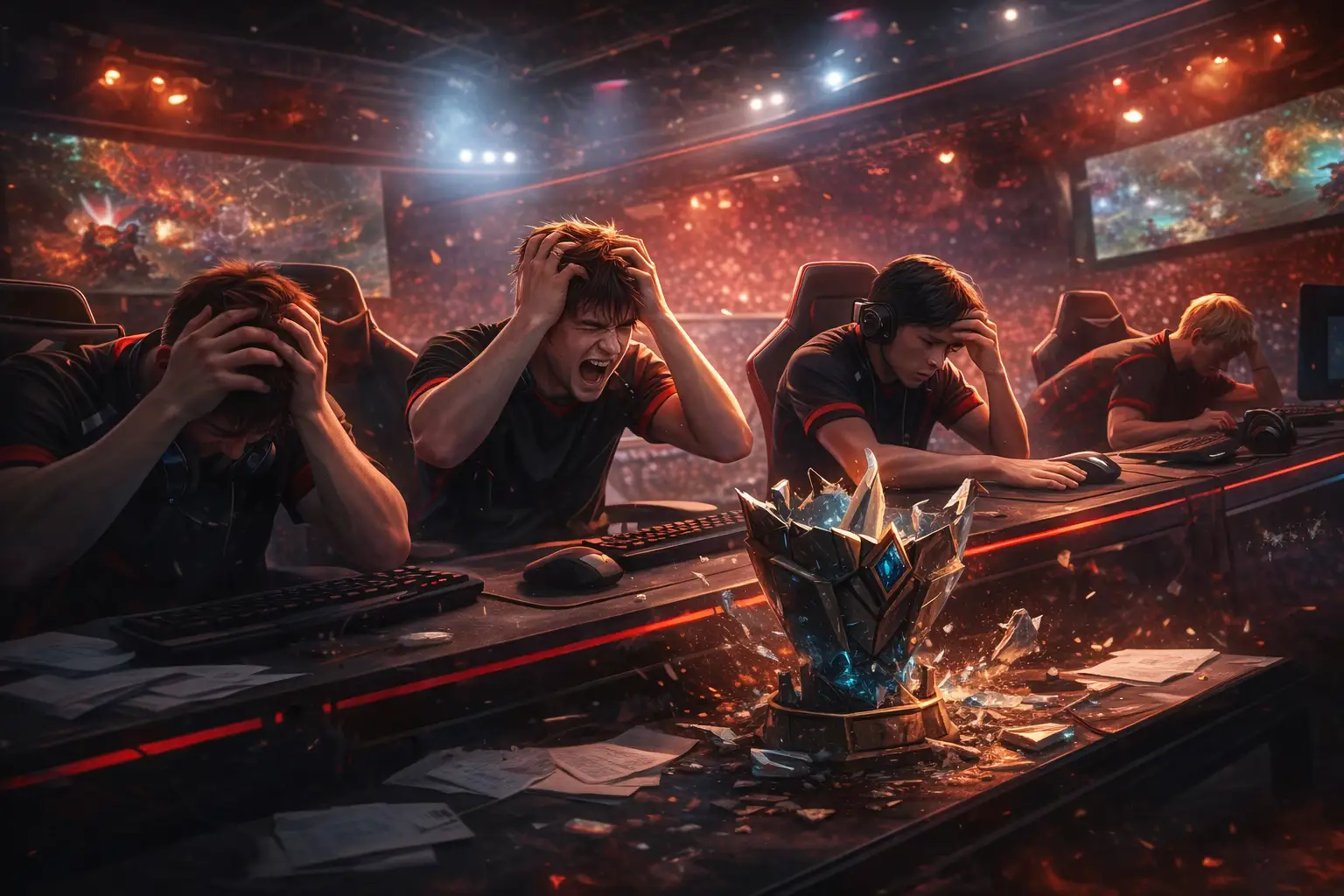
For many League of Legends players, Clash represents a high-stakes, team-focused environment where coordination and consistent execution are key. While solo queue experience is invaluable, the shift to Clash tournaments often exposes common mistakes that can cost games and diminish your chances of climbing the ranks. Understanding these pitfalls and actively working to correct them can make a significant difference in your overall performance.
Whether you’re a solo queue veteran looking to improve team synergy or a player aiming to break into Clash with more confidence, recognizing these frequent errors is the first step toward more stable results. This guide will focus on practical, actionable advice to help you avoid these missteps and build habits that translate well beyond Clash itself.
Before diving in, it’s important to acknowledge that Clash is a different environment than solo queue. Communication, draft strategy, and macro coordination weigh more heavily here. Mistakes that might be forgivable in solo queue tend to be punished more severely in Clash, where every decision can swing the momentum.
Here are some of the most common mistakes players make during Clash events that often cost games:
- Overcommitting to risky engages: In the heat of competition, players sometimes chase kills or force fights without proper vision or cooldowns ready, leading to unfavorable teamfights.
- Poor draft synergy: Selecting champions without considering team composition or role balance can lead to a lack of frontline or crowd control, weakening teamfighting potential.
- Neglecting wave management: Failing to freeze, slow push, or reset waves appropriately often results in losing map pressure and objective control.
- Lack of timely communication: Missing pings or failing to coordinate vision and objectives reduces team awareness and responsiveness.
- Inconsistent shotcalling: When no one takes clear leadership on objectives or engages, teams can become disorganized and reactive rather than proactive.
- Ignoring individual role responsibilities: For example, junglers not properly tracking enemy jungler or bot lanes not capitalizing on recall timings.
Addressing these mistakes requires a structured improvement plan that focuses on both individual execution and team dynamics. Here’s a practical framework to help you level up your Clash performance:
- Review your Clash games with a focus on decision-making: Identify moments where engagements were forced or avoided incorrectly and think about alternative choices.
- Prioritize champion pool optimization: Stick to a smaller set of champions that fit your playstyle and the team’s needs to reduce errors in unfamiliar matchups or roles.
- Practice clear and concise communication: Use pings and short voice calls to convey essential information like enemy summoner spell cooldowns, objective timers, and vision spots.
- Develop macro habits around wave control: Learn when to freeze, slow push, or fast push waves pre- and post-objective to maximize map pressure.
- Establish a shotcalling hierarchy: Even if informal, decide who leads calls on engages and objectives to avoid confusion and split decisions.
- Use downtime wisely: Between games, quickly discuss what worked and what didn’t to adjust strategies for the next match.
For players with limited time who want to improve without spending excessive hours grinding, it’s important to set realistic goals and focus on quality over quantity. Trying to fix everything at once often leads to burnout and frustration.
Instead, concentrate on one or two areas per Clash cycle—for example, improving communication or wave management—and build from there. Consistency in small improvements can lead to more tangible results than attempting a full overhaul in a short period.
Players with a busy schedule sometimes use Clash Boost as an optional way to reduce repetitive ranked bottlenecks and spend more time actually improving. This can help manage the time-intensive parts of climbing, allowing you to focus on honing mechanics and game sense during your available play sessions.
Ultimately, Clash rewards teams that combine strong individual skills with coordinated teamwork and smart decision-making. By avoiding these common mistakes and following a focused improvement plan, you can increase your chances of performing consistently well and enjoying a more rewarding competitive experience.
Explore more gaming boosting services, guides, and updates on the GoldBoosting homepage.

There are no approved comments yet. Be the first to leave one.